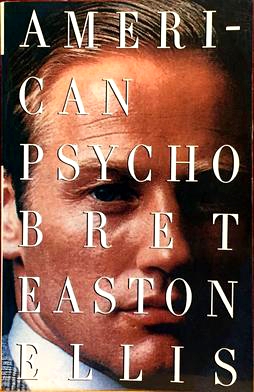
Bret Easton Ellis's Controversial Return: The American Psycho Author Condemns New York City
Few authors evoke the zeitgeist of a specific era quite like Bret Easton Ellis. The American Psycho author, whose iconic works defined a particular brand of urban alienation and capitalist excess in the late 20th century, has once again found himself at the center of a cultural firestorm. This time, however, the controversy doesn't stem from the dark corridors of fiction but from his candid, almost visceral, condemnation of New York City – the very metropolis that served as the backdrop for much of his most famous prose, including *American Psycho* itself.
Returning to New York for the first time in years to promote his latest novel, *The Shards*, Ellis didn't offer a nostalgic embrace of his old stomping grounds. Instead, he unleashed a barrage of critiques, famously asking, “How the f*** anyone can live here?” This blunt assessment has ignited a fierce debate, pitting long-time New Yorkers against those who share Ellis's disillusionment, and challenging the romanticized image of a city that never sleeps, but perhaps, has changed beyond recognition for some of its most famous former residents.
The American Psycho Author's Startling Return to a Transformed Metropolis
The journey back to New York for Bret Easton Ellis was anything but a triumphant homecoming. Arriving amidst a "horrible storm," Ellis recounted an arduous experience from the moment his plane touched down. An hour-long wait at the Delta baggage carousel, followed by a frustrating ride into the city, set the stage for his subsequent critique. Rather than the exhilarating energy often associated with Manhattan, Ellis found himself yearning for the quiet solitude of his hotel room, a glass of wine, room service, and the comfort of the Food Network.
This preference for isolation over engagement speaks volumes about his current perception. The city, once a vibrant muse that fueled his literary imagination, now presented itself as an inconvenient obstacle. His incredulous question, “How does anyone live here? How in the f*** does anyone live here?” wasn't just a rhetorical flourish born of travel fatigue; it signaled a profound disconnect between the author and the city he once called home for nearly two decades. For a writer celebrated for capturing the pulse of urban life, this sentiment marks a significant shift, prompting many to question what exactly has changed in New York City, or perhaps, within the American Psycho author himself.
A Tale of Two Cities: Ellis's Nostalgia for 90s NYC vs. Today's Reality
Bret Easton Ellis's relationship with New York City has clearly evolved. The author fondly recalls the 1990s as a "glorious time" to be in the city. Living there for almost 20 years, he was deeply enmeshed in what he describes as the "glorious magazine world," a vibrant cultural milieu that shaped his early career and literary output. It was a period of creative ferment and urban vitality that many, including Ellis, now view with a nostalgic lens. This era, characterized by a certain grit and bohemian charm, starkly contrasts with his recent observations.
After moving back to Los Angeles, where he grew up, in 2005, Ellis’s subsequent visits to New York – particularly in 2016 (his first in a decade) and his most recent trip for *The Shards* – revealed a city profoundly altered. The changes were so dramatic that he couldn't even recognize his old East Village neighborhood. The anecdote of his driver having to convince him that they were indeed on 13th Street between Third and Fourth Avenue, a location he knew intimately from his apartment in the American Felt Building (which he still owns but hasn't slept in since 2004), highlights the extent of this transformation. What was once familiar had become alien. Bret Easton Ellis on NYC: From Glorious 90s to Unrecognizable Chaos aptly captures this sentiment, illustrating how urban development, gentrification, and the relentless march of time can reshape a city's identity to the point of unrecognizability for those who once knew it best.
This stark contrast isn't just about physical changes; it's also about a shift in urban character. Many long-term residents echo Ellis’s lament, pointing to the loss of independent businesses, the homogenization of neighborhoods, and the escalating cost of living that pushes out artists and small enterprises, replacing them with luxury high-rises and corporate chains. The "glorious magazine world" of the 90s has largely given way to a digital landscape, altering the very fabric of creative collaboration and urban networking. This transformation raises critical questions about how cities manage growth while preserving their unique cultural identities.
Unpacking the "How Can Anyone Live Here?" Dilemma: A Deeper Look at Urban Discontent
Ellis’s rhetorical question about living in New York City taps into a broader vein of urban discontent that resonates far beyond his personal experience. His specific complaints – the airport delays, the traffic, the general logistical friction of navigating a mega-city – are universal frustrations for anyone who has grappled with modern urban infrastructure. However, for a writer like Ellis, whose work often dissects the psychological impact of environment, these mundane annoyances manifest as a fundamental rejection of the city's current state.
The city's high cost of living, relentless pace, and the perceived erosion of its authentic character are frequent subjects of discussion among residents and observers alike. New York, like many global metropolises, grapples with the paradox of being a magnet for aspiration while simultaneously becoming increasingly inaccessible and exhausting for many. What was once seen as a city of endless possibility for struggling artists and dreamers is now often perceived as a financial titan, where only the privileged can truly thrive without constant struggle. This raises a crucial question: has the city's appeal shifted from being a crucible of creativity to primarily a center of commerce and luxury?
For individuals like the American Psycho author, who experienced a different iteration of the city, the current reality can feel like a betrayal of its former promise. It's a testament to the powerful hold of nostalgia and how our personal history with a place can color our present perceptions. His observations serve as a stark reminder that while cities are dynamic entities, their evolution doesn't always align with the cherished memories of those who once found their identity within their streets.
Beyond the Skyline: Personal Struggles of the American Psycho Author
While the New York City debate has dominated headlines, a more somber and deeply personal struggle has also recently come to light for Bret Easton Ellis. The author has publicly shared the devastating news that his long-term partner of 14 years, Todd Michael Schultz, has been committed to a psych ward for three months following a drug-induced breakdown. This tragic revelation adds another layer of complexity to the American Psycho author's current frame of mind, potentially contributing to a broader sense of disillusionment and unease.
Ellis has openly spoken about Schultz's erratic behavior leading up to the commitment, including an arrest for breaking into a neighbor's house and "ransacking her things." The emotional toll of this situation is palpable, with Ellis expressing that he has no idea "of where he is or why he is there." This personal turmoil, unfolding concurrently with his critical re-evaluation of New York City, paints a picture of a man grappling with significant challenges on both a public and private front. It's a stark reminder that even celebrated figures face profound personal hardships that can undoubtedly color their perception of the world around them. American Psycho Author Bret Easton Ellis on Partner's Psych Ward Commitment provides further insight into this difficult period, offering a glimpse into the human vulnerability behind the controversial persona.
While distinct from his urban critique, these personal struggles could be seen as reinforcing a more cynical or weary worldview. An artist’s work is often inextricably linked to their lived experience, and such profound personal challenges can certainly influence their creative output and general outlook. It highlights the often-overlooked human element behind celebrity headlines, reminding us that even those who dissect society's darker corners in their fiction are not immune to personal tragedy.
The Divided Response: Generational Shifts and the Evolving NYC Identity
Predictably, Bret Easton Ellis's outspoken critique of New York City has sharply divided opinion. Social media, ever the arbiter of public sentiment, quickly became a battleground for reactions. Many of Ellis's fans and fellow cultural commentators jumped to his defense, acknowledging that the city has indeed undergone significant and often disheartening changes. They resonated with his sense of loss for the grittier, more culturally distinct New York of yesteryear.
However, an equally vocal contingent has pushed back, accusing the American Psycho author of nostalgia-tinted privilege and out-of-touch observations. A recurring sentiment online was the idea that "young Bret Easton Ellis would have laughed at old Bret Easton Ellis" for "whining about delays at the airport and traffic into the city." This line of criticism suggests that his current complaints are those of a seasoned, comfortable author far removed from the youthful struggle and urban grit that once defined his characters and, perhaps, his own early experiences. It highlights a generational and experiential divide: those who currently live and thrive in the city, adapting to its challenges, versus those who view it through the lens of a bygone era.
This debate extends beyond Ellis himself, touching upon the broader question of urban identity. Is New York City meant to remain a fixed entity, or is its very essence its constant state of flux? The responses underscore how profoundly people identify with the city and how fiercely they defend its various iterations. It's a testament to New York's enduring cultural significance that a single author's critique can spark such a widespread and passionate dialogue about its soul.
Conclusion
Bret Easton Ellis's recent condemnation of New York City serves as more than just a celebrity rant; it's a potent cultural commentary that has sparked a vital conversation about urban evolution, personal nostalgia, and the ever-changing relationship between artists and the cities that inspire them. The American Psycho author's disillusionment, whether rooted in personal hardship, the city's undeniable transformation, or a combination of both, compels us to examine what we seek from our urban centers and what we lose along the way.
His experience is a powerful reminder that while cities are dynamic entities, constantly reinventing themselves, they don't always do so in ways that align with our cherished memories or idealizations. As New York City, and indeed metropolises worldwide, continue to grapple with economic shifts, gentrification, and the challenges of modern living, Ellis's controversial remarks provide a stark and essential perspective, urging us to consider not just how we live in these places, but also how these places, in turn, live within us.